The BIA release described a major change in federal administration of roughly 25,000 acres. Its explanation was more precise than the language of restoration in its headline.
The December 1978 opinion read the agreement as a conditional exchange whose terms had not been fulfilled. It rejected both earlier title opinions and the claim that the 1904 reclamation program completed the bargain.
A lengthy reconsideration reaffirmed the Margold position and explained why Interior believed the disputed non-irrigable lands had been ceded. Its reasoning became the immediate target of the 1978 reversal.
Requests for compensation and protection along the All-American Canal prompted an Interior opinion that denied tribal title to disputed non-irrigable lands. Interior would reverse that interpretation four decades later.
Congress brought irrigable reservation lands into a federal reclamation framework. Decades later, officials disputed whether that development fulfilled the earlier cession agreement.
President McKinley's order addressed the former military property south of the Colorado River. Its narrow wording matters when tracing later references to the reservation boundary.
The 1894 statute joined approval of the agreement to directions on allotments, land sales, irrigation, and presidential action. Those provisions became central to the later dispute over performance.
Reports, correspondence, proposed legislation, and maps show the expectations—and unresolved engineering questions—that accompanied the agreement sent to Congress.
The Quechan Tribal Council recently selected Comptroller Mr. Dennis Irby to also serve as Tribal Treasurer, raising questions from members about why the position is being filled now after remaining vacant for decades and how the Treasurer role will function alongside the Comptroller position.
The Quechan Constitution does not require the Treasurer to be a tribal member, but it does require the Council to give careful and impartial consideration to the selection based on qualifications. The Treasurer is responsible for safeguarding tribal funds, maintaining financial records, reporting receipts and expenditures, and ensuring funds are only disbursed when properly authorized.
The appointment also highlights the need to clearly define the responsibilities and internal controls between the Comptroller and Treasurer roles. At the same time, qualified Quechan professionals in accounting, finance, auditing, banking and related fields are encouraged to submit letters of interest and résumés so the Tribe is aware of the experience available within its own membership.
Campaign focuses on children, open government, employees, housing, infrastructure, land, water and tribal sovereignty
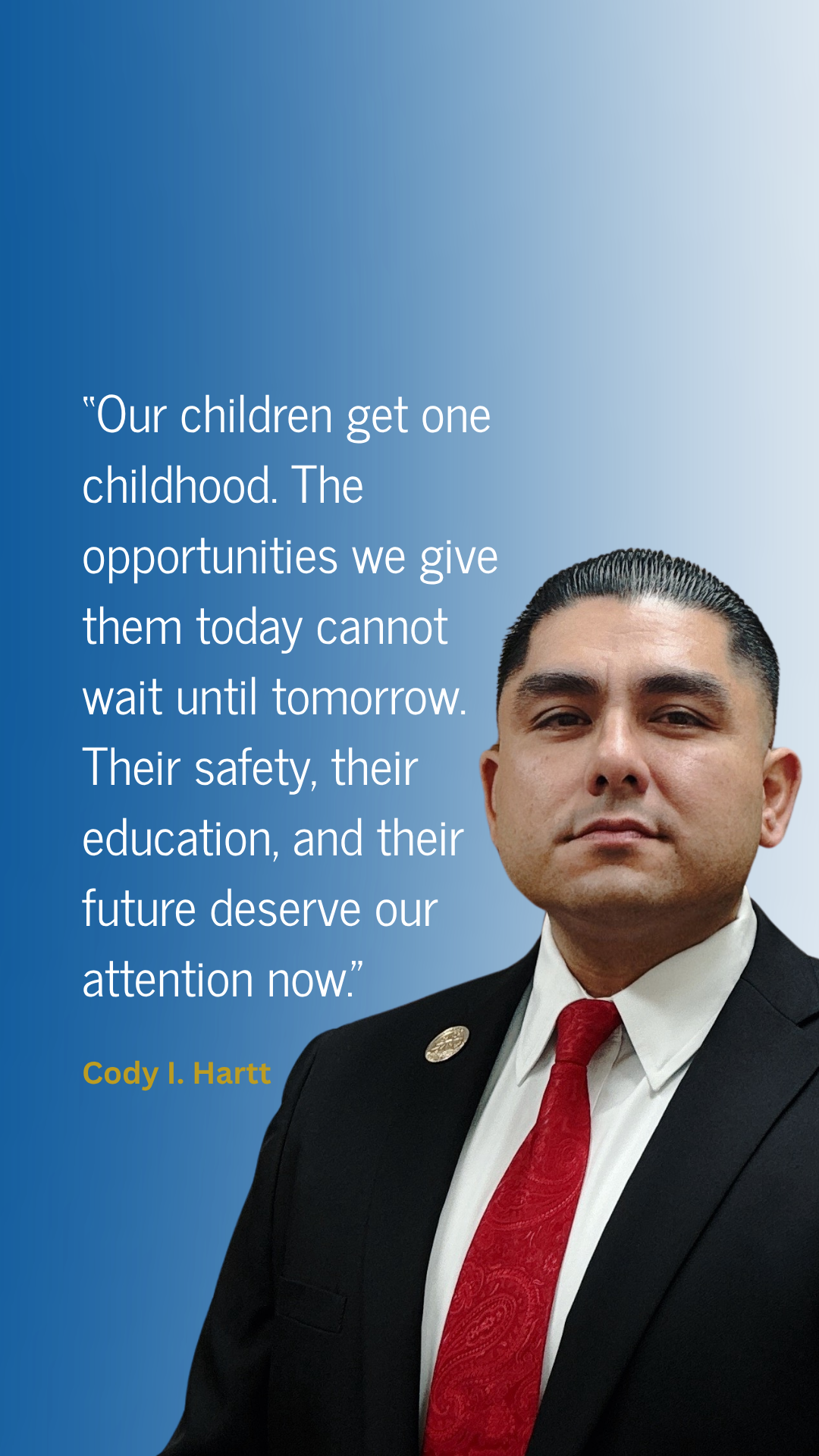
Cody Hartt announced his reelection campaign for the San Pasqual Valley Unified School District Board of Trustees after filing his 2026 Statement of Intention. Hartt, who currently serves as Board President, is seeking another term in the November 3, 2026 General Election.
His campaign is centered on the message “Children First. Always.” and focuses on student safety, Career and Technical Education, staff and student recognition, responsible spending, transparency, and long term investments that keep more resources focused on students.
During his current term, Hartt has supported student recognition at board meetings, the appointment of a student board member, employee recognition, expanded CTE opportunities, the district’s solar project, and the selection of a new superintendent.
Hartt says he is seeking reelection because there is still more work to do and wants to continue making decisions based on what best supports students, families, teachers, and the future of the district.